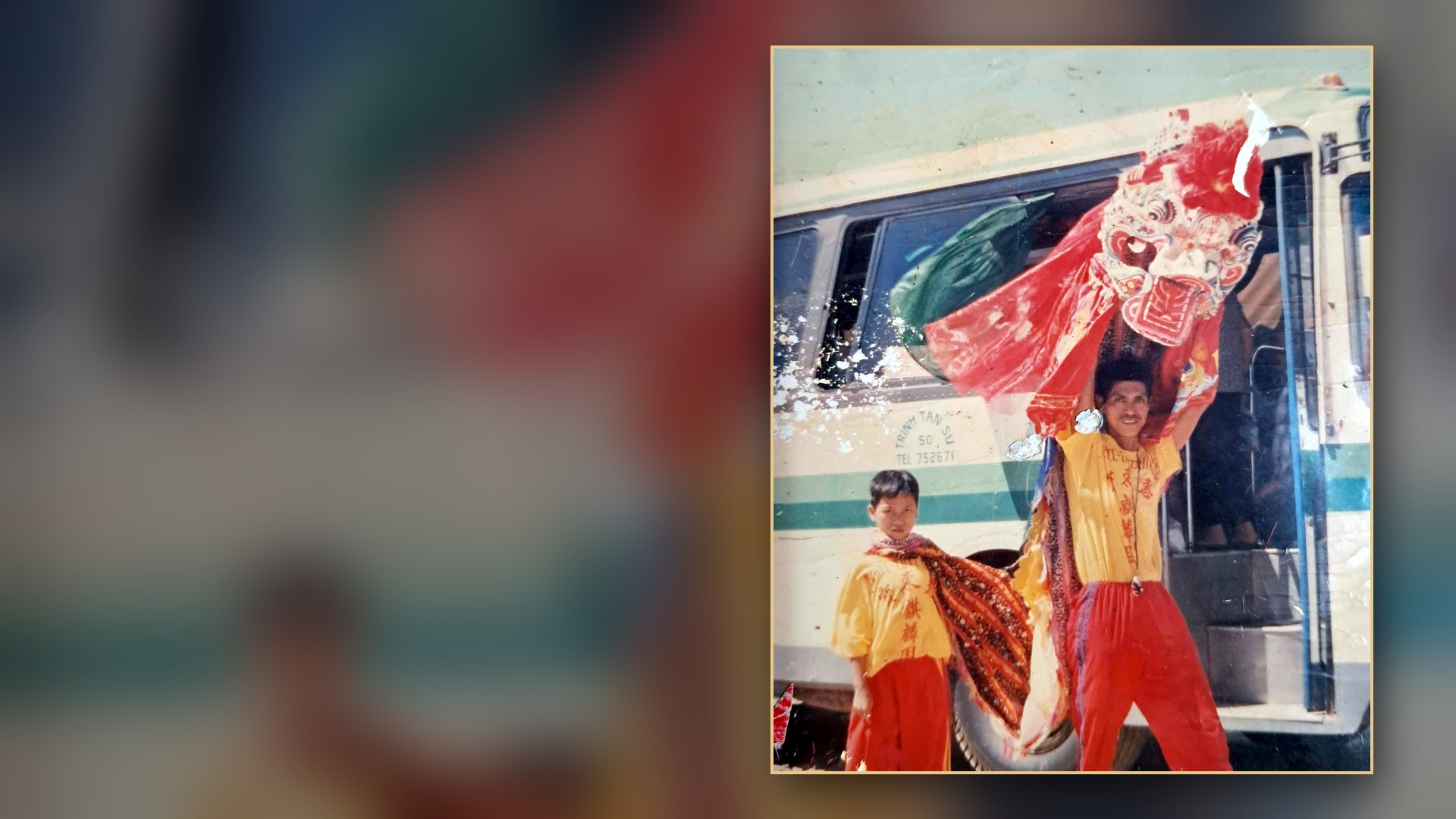
In Vietnam, the beat of the lion-dance drum is the sound of celebration: Lunar New Year (Tết), the Mid-Autumn Festival, shop openings, village festivals. But behind those lively street performances lies a much deeper layer of history, stretching from the pagodas of the Lý dynasty to the small lion-head workshops of today’s Saigon. This post travels back in time a little, then ends with the story of a man who keeps the craft alive: artisan Vương Giai Huân.
The Lý and Trần dynasties: when sacred beasts entered holy ground
The Lý dynasty was founded by King Lý Thái Tổ in 1009 and lasted until 1225. Together with the Trần dynasty that followed, these were the two longest dynasties in Vietnamese history, and a golden age for the military, the economy, culture, art and architecture. Buddhism was at the heart of spiritual life, and it is in the pagodas of this period that we find the earliest surviving images of sacred animals.
The finest example is Phật Tích Pagoda in Bắc Ninh, built in the 11th century. In front of its main hall stand ten stone guardian beasts in five pairs: lions, elephants, buffaloes, horses and rhinoceroses. Nearly 1,000 years old and now a National Treasure, each figure is about 1.5–1.8 m long and 1.2 m tall, resting on a lotus pedestal in a calm, kneeling pose.
Researchers note that Lý-dynasty lions look noble and powerful yet gentle and approachable, symbolising the strength of the Buddha’s teaching. They are very different from the fierce stone lions that guard tombs in Chinese tradition. The custom of carving stone lions continued into the Trần dynasty, although few examples have been found, such as the lion at Thông Pagoda.
The lân: second of the Four Sacred Creatures
In traditional belief, the lân ranks second among the Four Sacred Creatures (Tứ linh): dragon, lân, tortoise and phoenix. Its image appears on communal houses, pagodas, temples and shrines across the country as a wish for peace and prosperity. Some researchers believe the lân was originally an imaginary creature borrowed from China, but over the centuries the Vietnamese gave it a look and character of their own.
From temple roofs, the lân came down to the streets as a dance. In the South it is called múa lân; in the North it is usually called múa sư, the lion dance. Scholars still debate the exact origins of the Mid-Autumn Festival in Vietnam. Some link the autumn full-moon festival to the wet-rice culture of the ancient Vietnamese, even pointing to scenes on the Ngọc Lũ bronze drum; others believe it came from China. Most likely it is the result of many layers of cultural exchange. Whatever its roots, neither Tết nor Mid-Autumn in Vietnam is complete without the lion drum.
Making a lion head: bamboo, paper and a pair of eyes
A traditional lion head is made entirely by hand. The maker bends bamboo strips into a frame, pastes on layers of paper with glue, lets it dry, trims it, then paints the base colour, draws the patterns and attaches the beard and mane. A good head has a frame sturdy enough to last yet light enough for the dancer to move freely. Artisans in Huế stress that the eyes are the most important detail, because they give the lion its spirit.
Artisan Vương Giai Huân: growing up among lions
In Saigon, Vương Giai Huân is one of the people keeping this craft alive. His father was a martial arts master who trained lion dancers, so his childhood was filled with drumbeats and trips following lion troupes through the city streets to learn the craft. Today he hand-makes mini lion heads, each one unique. His story has been featured on VTV1, Kinh tế Sài Gòn Online and Việt Nam News.
Watch a short video about his journey:
Paint your own lion head

If you want to touch this history in the most personal way, join the lion-head painting workshop with artisan Giai Huân at Myths Cafe & Resto (4/7 Hoàng Dư Khương, Ho Chi Minh City). You will hear the story of the craft from the artisan himself, then paint your own lion to take home as a keepsake.
- Book the workshop: Craft Workshop in Ho Chi Minh City on Viator
- Take a lucky lion home: Handcrafted mini lion. Workshop guests can use code MYTHSWORKSHOP10 for 10% off.
From the stone lions kneeling at Phật Tích nearly a thousand years ago to the little lion on Giai Huân’s workbench today, the image carries the same wish: peace, good fortune and gentle strength.
Frequently asked questions
Where can I paint a lion head in Saigon?
At Myths Cafe & Resto, 4/7 Hoàng Dư Khương, District 10, Ho Chi Minh City, with artisan Vương Giai Huân. You can book the workshop on Viator.
How long is the lion head painting workshop?
About 3 hours. Classes run daily at 9:00, 13:00 and 17:00 and are guided in English.
What does the lion symbolize in Vietnam?
Peace, good fortune and protection. Lions appear at Lunar New Year (Tết), the Mid-Autumn Festival and shop openings.
Sources: Vietnam National Museum of History (Lý–Trần, 1009–1400); VietNamNet; Thanh Tra newspaper; Kiến Thức; Công Thương magazine; Luật Minh Khuê; VietnamPlus; Vietnam mon pays natal.
Paint your own lion head: book the workshop at Myths Cafe, or take home a handmade mini lion from TravelnEat.
Leave a Reply